
GloFish
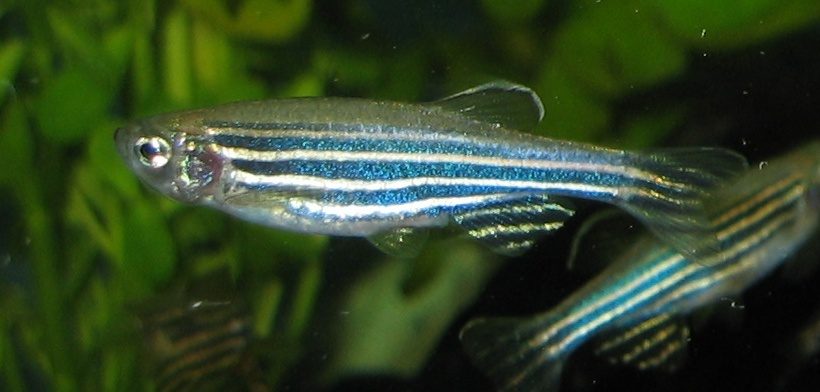
A fluorescent zebrafish carrying a jellyfish or coral gene. Care is the same as for a plain zebrafish, but breeding and resale come with legal limits.
| Temperature | 18–26 °C (64–79 °F) |
|---|---|
| pH | 6.0–7.5 |
| Hardness | 6–15 °dGH |
| Volume | from 30 l (8 gal) |
| Size | up to 6 cm (2.4 in) |
| Lifespan | 3–4 years |
What it is and where it comes from
GloFish is not a species but a trademark for fluorescent aquarium fish. The first was the zebrafish, which received a green fluorescent protein gene from a jellyfish at the National University of Singapore in 1999, and later a red coral gene. The aim was scientific, a fish that would flag water pollution. The zebrafish itself comes from the rivers of India and Bangladesh and has been kept since the early 20th century.
GloFish reached the US market in 2003, and black skirt tetras, barbs, rainbow sharks, bettas, corydoras and angelfish followed. Sale is banned in the European Union; in Russia GloFish are on the market. The licence forbids deliberate breeding and the sale of offspring, although eggs can be produced. The glow is inherited, yet the EU still does not sell the fish.
Housing and conditions
Care matches a plain zebrafish. Adults run 3–6 cm (1.2–2.4 in); temperature 18–26 °C (64–79 °F), pH 6.0–7.5, hardness 6–15 °dGH. Keep five or more, from 30 l (8 gal), with 60–80 l (16–21 gal) more practical. A long tank beats a tall one, and the volume can be estimated in the calculator. A lid is mandatory, as zebrafish jump, and the tank must be cycled.
Moderate current, bright light, any plants, neutral substrate. The fluorescence shows under blue lamps, but the fish has no use for it, the effect is for the owner. Lights on a timer for 8–10 hours; 20% water changes a week.
Feeding
Omnivorous, and the food stays small: flakes, micro granules, daphnia, brine shrimp. Feed once a day, a portion eaten in 2–3 minutes. Overfeeding shows as a swollen belly and cloudy water; spare food sinks, rots and pushes nitrate up.
Lifespan
3–4 years for a GloFish, while a plain zebrafish with good care reaches 5–7. Steady temperature and clean water decide most of it: metabolism runs higher in warm water, so the fish wears out faster.
Temperament and tank mates
A peaceful shoaling fish. Tank mates: neons, tetras, rasboras, guppies, corydoras, small catfish. Not with large cichlids, goldfish or predators that see a zebrafish as food.
Squabbles happen but leave no injuries; the bigger the group, the calmer the fish and the less it hides. With shrimp it gets along, though it may eat fry.
Diseases
Ich. White spots, scratching, rapid breathing. Treated in quarantine with antiparasitic medication as directed.
Fin rot. Fin edges turn white and tear. The cause is dirty water, so start with water changes and gravel vacuuming.
Dropsy. A swollen belly, raised scales, listlessness. It often follows a bacterial infection; early quarantine and treatment on a vet's advice help.
Ammonia poisoning. The fish hangs at the surface gulping air, with red gills. It needs an urgent water change, aeration and no food; the cause is usually overfeeding and dirty water, not infection.
A vet makes the diagnosis; antibiotics at random do harm.
Breeding
Easy to breed: the fish is ready from about six months. Spawning tank from 30 l (8 gal), water 6–10 cm (2.4–4 in) deep, a separator grid or Java moss, two or three males and one female, in the evening. Up to 400 eggs, hatching in 30–36 hours at 26–28 °C (79–82 °F). The breeders come out, or the clutch gets eaten. The legal catch: the licence forbids deliberate breeding and the sale of offspring, so this is an experiment, not a business.
Who it suits
A good pick for a first tank: hardy, eats dry food, lives in a shoal. It needs 30–60 l, a lid, regular water changes and a spot away from the window, since sun brings an algae bloom. Minus: a short life, the ban on selling offspring, and the way some aquarists feel about a GM fish. For a child it is a bright, easy fish; for an expert, a plain zebrafish with colour.
The calculator works out water volume, weight, filter load and how many fish your tank can carry.
Open the calculator