
Nerite snail
A nerite cleans the glass and will not multiply in fresh water. Here are hardness, feeding and the reproductive dead end of this snail.
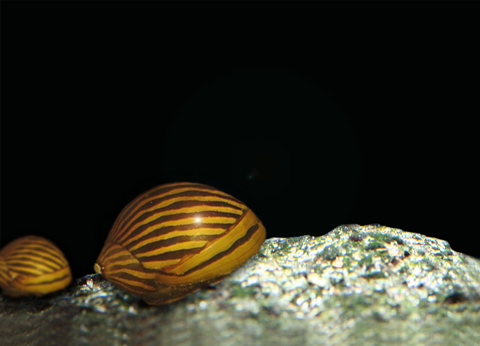
| Temperature | 22–27 °C (72–81 °F) |
|---|---|
| pH | 7.5–8.0 |
| Hardness | 8–18 °dGH |
| Volume | from 10 l (2.6 gal) |
| Size | up to 3 cm (1.2 in) |
| Lifespan | 2–3 years |
What it is and where it comes from
Nerite is not one species but the genus Neritina in the family Neritidae. N. natalensis from South Africa is the one sold most often, along with species from Southeast Asia and the Americas. They live in river mouths and streams where the water mixes with the sea.
That explains the key trait: nerite larvae develop in salt water and the adults return to fresh water. The snail went mainstream in the 2000s, once it turned out to clean glass and not to breed in a freshwater tank. For many people that is exactly the plus.
Housing and conditions
Temperature 22–27 °C (72–81 °F), pH 7.5–8.0, hardness up to 20 °dGH, preferably 8–18. In soft acidic water the shell breaks down, so hardness and calcium matter more than they seem to.
Volume at a rate of 8–10 l per snail. A lid is mandatory: nerites crawl up the glass above the water line and dry out on the floor without one.
Current moderate. A filter and aeration are needed, but a strong stream blows the snail off the glass. Any substrate, with stones and driftwood desirable as pasture. Light is not critical, though algae grow thicker under bright light.
Nerites tolerate nitrogen compounds worse than fish, so they must not go into a new tank. Copper in medicines is lethal, as it is for shrimp.
Feeding
The diet is almost entirely plant matter: algae on glass, stones and decor, and dead parts of plants. A nerite does not touch living clumps, which is why it is kept in planted tanks.
If there is little algae, spirulina tablets or catfish wafers are given. Overfeeding shows as heavy droppings and cloudy water. A hungry snail sits motionless on the glass and weakens slowly.
Lifespan
2–3 years with stable parameters. The main cause of early death is not old age but a sudden change of water after purchase.
Temperament and tank mates
Peaceful, nocturnal, it bothers no one. It gets along with small and medium fish: tetras, rainbowfish, livebearers, corydoras. Large predators and species that eat molluscs on purpose are dangerous: loaches, puffers, some cichlids.
It is not kept with Helena, which breaks the shell open and eats the soft tissue. With a mystery snail and a ramshorn only food is contested, though in a small volume that shows.
Problems
- Shell erosion. The tip turns white and pits appear. The cause is low hardness, and raising GH plus calcium helps.
- Copper poisoning. The snail retracts and dies within a day. The source is fish medicines and old pipes.
- Death after transfer. A new snail stays inside its shell and dies within a day or two. pH and hardness differ, so bag water is mixed with tank water gradually.
- Apparent death. A nerite sits in one spot for days with its operculum shut and does not react. This is normal behaviour and it should be left alone.
A specialist makes the exact diagnosis, but with invertebrates it is usually easier to move the animal into clean water and fix the parameters than to treat blindly.
Breeding
Impossible in fresh water, so it is a reproductive dead end. The female still lays white capsules up to 3 mm on glass and stones, but no larvae come out, because they need salt water. The clutches are hard, difficult to remove, and over time they spoil the look of the tank. Breeding calls for separate brackish containers and almost nobody manages it at home.
Who it suits
A beginner who wants clean glass without risking a hundred snails. 10 l per individual is enough and care is minimal. Drawbacks: a short life, sensitivity to copper, white clutches on the decor and a mandatory lid. One more caveat: after purchase the snail must not be placed opening-up, since it cannot always right itself.
The calculator works out water volume, weight, filter load and how many fish your tank can carry.
Open the calculator