
Tetras
A genus of small characins, represented in tanks by the rosy tetra, H. amandae, the lemon tetra and the black neon. Shared care rules and the differences between species.
| Temperature | 22–26 °C (72–79 °F) |
|---|---|
| pH | 6.0–7.5 |
| Hardness | 2–12 °dGH |
| Volume | from 50 l (13 gal) |
| Size | 2–5 cm (0.8–2 in) |
| Lifespan | 3–6 years |
What it is and where it comes from
The American ichthyologist Marion Durbin described Hyphessobrycon in 1908, and the genus is still a mess: about 150 species and no agreement on its borders. In 2024 the rosy tetras were moved into a genus of their own, Megalamphodus, so some familiar names may change. The genus runs from 1.7 to 9.6 cm, so a tetra is not always a nano fish.
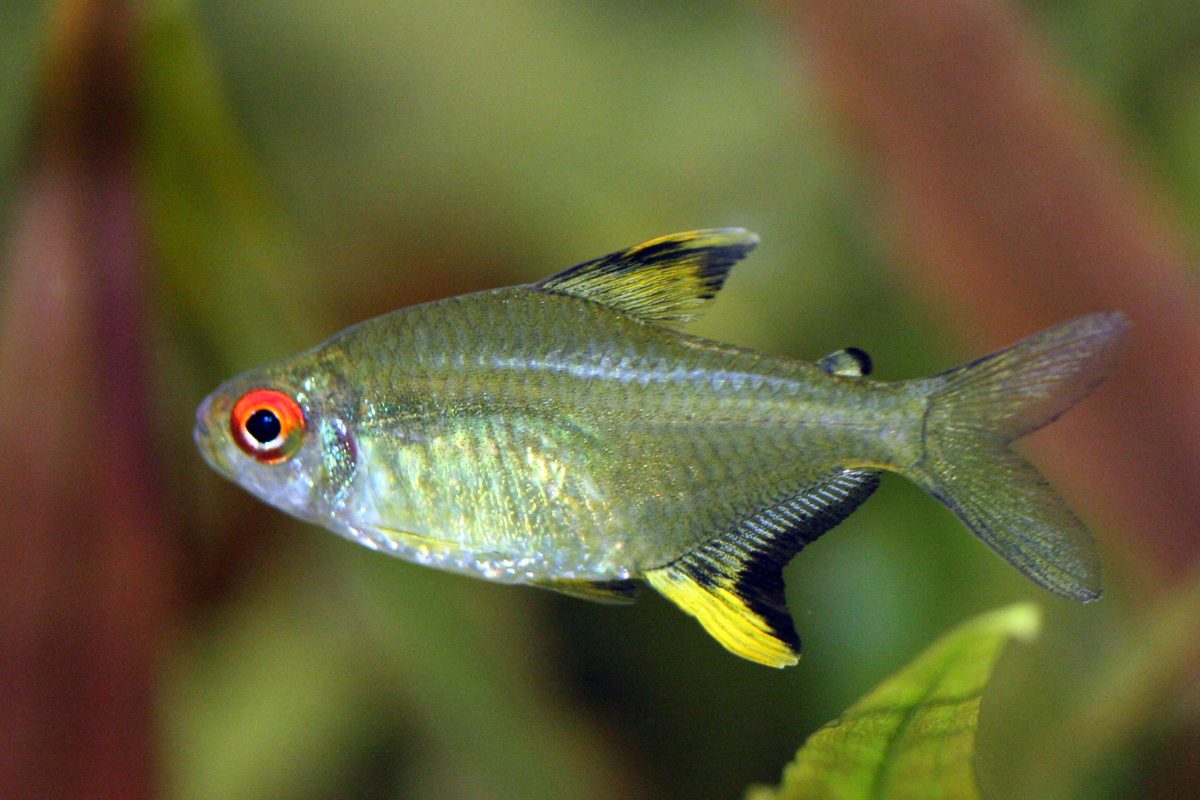
Range: from southern Mexico to the Río de la Plata. In tanks you mostly see the rosy tetra (H. flammeus), H. amandae, the lemon tetra (H. pulchripinnis) and the black neon (H. herbertaxelrodi). The rosy tetra is under pressure in the wild: the rivers it lived in are polluted, and in Brazil the species is on the red list.
Housing and conditions
Temperature 22–26 °C (72–79 °F), and 20–26 °C (68–79 °F) for the rosy tetra. pH 6.0–7.5, hardness 2–12 °dGH. Soft, slightly acidic water matters more than it looks: in hard water the fish fades and does worse. Tank from 50–60 l (13–16 gal); a school of ten small tetras is fine on a 60×30 cm footprint.
Dim light, floating plants overhead, driftwood, leaf litter on the bottom. Weak current, and a sponge over the filter intake. Peat and leaves acidify the water, but in a fresh tank that is an extra risk: stability first, biotope later. A lid is needed, since tetras jump, especially when startled.
Feeding
Omnivores. In the wild they take small crustaceans, larvae and filamentous algae. In the tank: flakes, microworms, daphnia, brine shrimp. Feed once a day; the portion should go in a minute.
Overfeeding shows as a bloated belly and a fish hanging at the surface. Obesity in tetras develops quietly: the fish stays active but stops spawning, and then the swim bladder starts to suffer.
Lifespan
3–6 years depending on the species. The small H. amandae and rosy tetras live 3–4 years; lemons and black neons reach 5–6. Temperature and nitrate matter more than size, though small species still go earlier because of it.
Temperament and tank mates
Peaceful schooling fish, kept in groups of 8–10. In a school they stay tight and come out into open water more boldly; alone they hide and fade. That is why tetras often go in with shy cichlids as dither fish.
Tank mates: danios, serpae tetras, apistogrammas, corydoras, bristlenose plecos. Not: large cichlids, goldfish, barbs. Barbs nip fins, and a big fish swallows a tetra whole.
Diseases
What comes up most:
- Neon tetra disease (Pleistophora hyphessobryconis): white patches in the muscle, the fish keeps to itself. No cure, so sick fish go.
- Ich: white spots, scratching. Treated with antiparasitic medication per the label.
- Fin rot: milky edges on the fins, usually in dirty water.
- Obesity: heavy belly, no spawning. Fasting days help.
A vet makes the diagnosis; blind antibiotic treatment does harm.
Breeding
Egg scatterers with no parental care. Spawning tank 10–20 l (2.6–5 gal), dim light, moss or a grid on the bottom, soft slightly acidic water a couple of degrees warmer than usual. Put the pair or group in overnight and spawning happens in the morning. The female releases 100–300 eggs, then remove the adults. Eggs hatch in 24–36 hours, the fry are tiny and eat infusoria for the first days. Place the spawning tank by a window: morning light sets off the spawn. Raising the fry is harder than with danios, but the adults can leave right after spawning.
Who it suits
A newcomer with a stable tank of 50 l or more and soft water. Tetras look best as a school and create almost no trouble. Minuses: sensitivity to nitrate, small size, a short life and the need for soft water. They do not suit hard water or a fresh, unsettled tank. Work out the load on your tank in the calculator.
The calculator works out water volume, weight, filter load and how many fish your tank can carry.
Open the calculator