
Cichlasoma cichlids
The trade sells dozens of fish from different genera under the name cichlasoma. Here is what they have in common and how to pick a tank for one species.
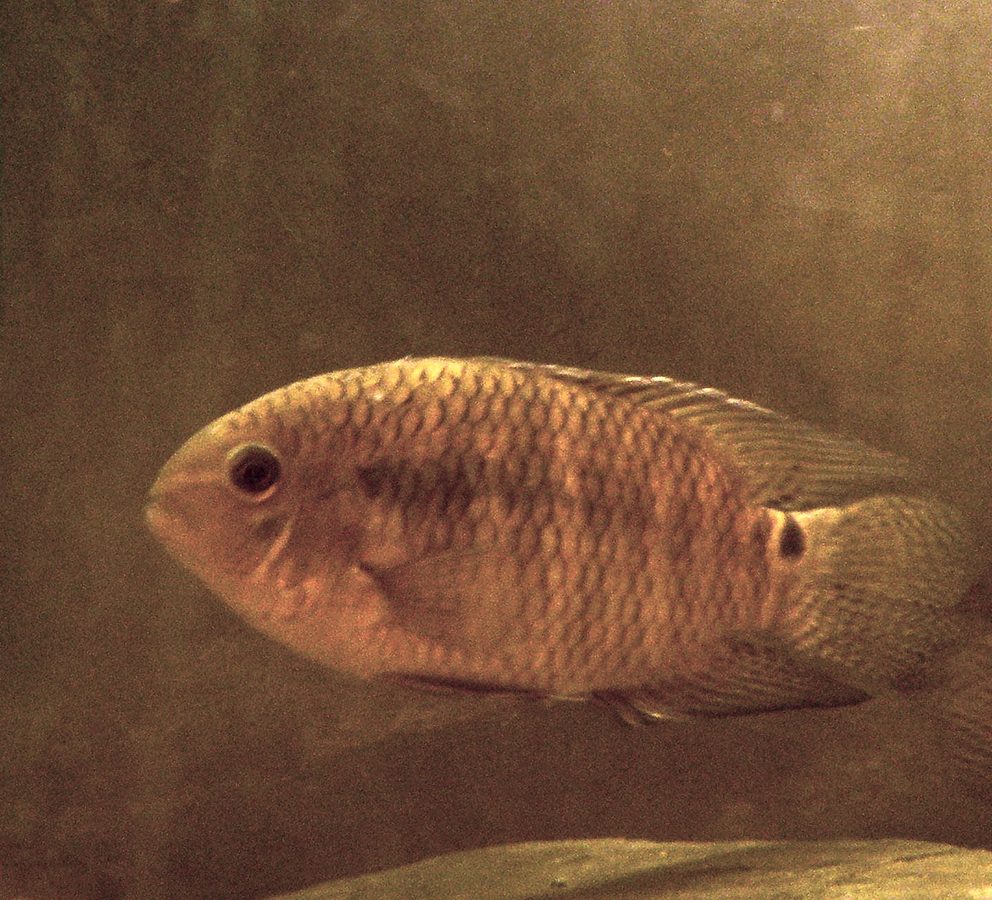
| Temperature | 22–28 °C (72–82 °F) |
|---|---|
| pH | 6.5–8.0 |
| Hardness | 5–15 °dGH |
| Volume | from 100 l (26 gal) |
| Size | 10–40 cm (4–16 in) |
| Lifespan | 8–15 years |
What it is and where it comes from
Cichlasoma is not one species but a group. The genus appeared in the mid-19th century and took in nearly every American cichlid: by the 1990s it held about 200 species. Then came the revision, genera were split off, and the old names stayed in the trade. The convict cichlid is now Amatitlania nigrofasciata, the firemouth Thorichthys meeki, the jack dempsey Rocio octofasciata. FishBase counts sixteen true Cichlasoma species, rare in shops.
The group runs from the central United States to Brazil. The chanchita came first and has almost vanished from the trade. The firemouth reached Europe in 1933, brought to the USSR by Sergey Obraztsov. The convict arrived a year later and is still the most common.
Housing and conditions
Figures vary by species, so the table gives a range, not a per-fish recipe.
| Parameter | Value |
|---|---|
| Temperature | 22–28 °C (72–82 °F) |
| pH | 6.5–8.0 |
| Hardness | 5–15 °dGH |
| Volume | from 100 l (26 gal); large species 450 l (119 gal) |
| Size | 10–40 cm (4–16 in) |
| Lifespan | 8–15 years |
A convict pair is fine in 100 l (26 gal), the firemouth wants 150 l (40 gal), the jaguar cichlid 450 l (119 gal). Flow moderate, light dim, sand or fine gravel, because these fish dig. They uproot plants, so only anubias on stone survives. A lid is essential, a startled cichlid jumps. Change 20–30% weekly and filter well; the calculator checks your volume.
Feeding
Most species are predators: small fish, insects, larvae in the wild. In the tank, cichlid pellets plus bloodworm, prawn, fish pieces and some plant food. Feed 1–2 times a day, a portion gone in a couple of minutes.
Overfeeding: swollen belly, lethargy, no appetite, the fish lies low and breathes faster. Obesity follows, costing years of life in large species. Leftovers rot in warm water, ammonia climbs, and the cichlid is poisoned rather than fed.
Lifespan
8 to 15 years, and the spread is not random. The convict lives 8–10, the diamond cichlid about 10, the firemouth up to 12, the jaguar up to 15. A cramped tank with rare water changes shortens any of these.
Temperament and tank mates
They are territorial, the main thing to know before buying. Outside spawning many species tolerate neighbours; during spawning they attack anything near the clutch. Males are bigger and more aggressive.
They get along with cichlids of similar size, large catfish and big barbs, and not with neons, guppies, small tetras, shrimp or goldfish. The firemouth is calmer; the jaguar and the Salvini cichlid are dangerous to anything smaller.
Diseases
Ich. White spots, rubbing on decor. Rarer than in characins; their scales are dense. Antiparasitic product as directed, with the temperature raised.
Hexamitiasis. White stringy faeces, no appetite, sunken belly, pits on the head. Needs a water test and a vet's prescription.
Bacterial infection. Torn fins, ulcers, red patches. Tests and water changes first, medication after.
Fight injuries. Grazes, missing scales, torn fins. Fast to heal, but fungus settles in open wounds.
Obesity. Swollen belly, low activity, no appetite. Fasting days and a new diet, not drugs.
Only a vet can diagnose exactly; blind antibiotics do harm.
Breeding
They spawn on a substrate: a flat stone, driftwood, sometimes the tank wall. The pair cleans it, the female lays 300 to 1000 eggs, the male fertilises them. Both parents guard and fan the clutch, remove white eggs and lead the fry for weeks. The hard part is forming a pair: sex differences are weak, and two fish that dislike each other can kill one another.
Who it suits
An experienced keeper ready for 150 l (40 gal) and up and for territorial scraps. A beginner should start with the convict: hardy, though it bites neighbours too. Drawbacks: size, aggression and plants to protect. The plus is intelligence and parental care, fascinating to watch. More articles in the reference.
The calculator works out water volume, weight, filter load and how many fish your tank can carry.
Open the calculator